

Why fiber is the key to good nutritional health
We see it on the packaging of many foods and in numerous TV ads: ‘enriched with fiber,’ ‘contains fiber’… but what exactly is fiber? It is the edible part present in various plant-based foods (legumes, nuts, vegetables, fruits, and cereals) that is resistant to digestion and absorption, meaning it is indigestible (1). As a result, it passes through the gastrointestinal tract intact. Despite not being digestible, fiber is essential for intestinal health. Its role in the digestive system begins with chewing and ends with the evacuation of stool, making it crucial for many functions in our body. Fiber is also the key to good dietary health and allows you to eat a variety of foods in a healthy and balanced diet.
What types of fiber are there and where can they be found?
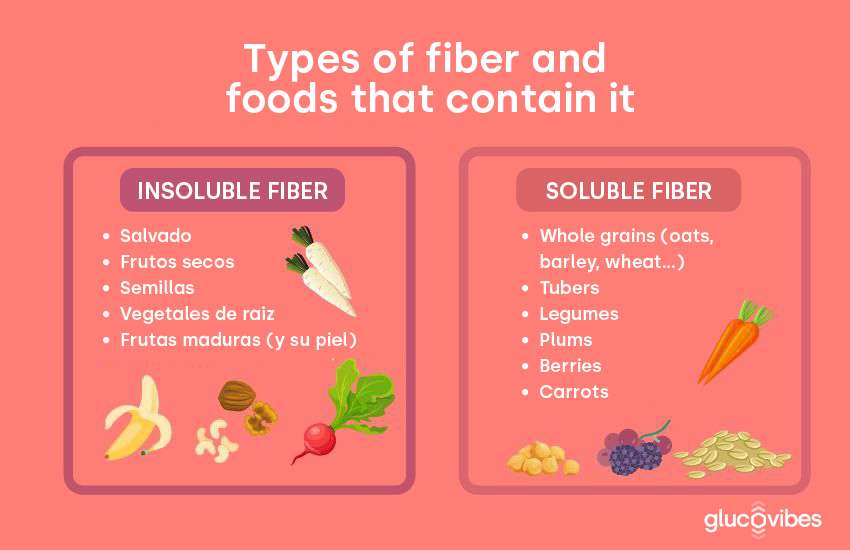
Generally, when talking about fiber, we differentiate between two types depending on their solubility (1):
- Insoluble fiber: This type of fiber does not have the ability to retain water, so it does not form viscous solutions in the stomach or the small intestine. It acts in the large intestine by increasing the volume and weight of stools, thus accelerating intestinal transit, meaning it has a laxative effect.
Some foods rich in insoluble fiber include wheat flour, bran, peas, root vegetables, cereals, and ripe fruits.
- Soluble fiber: This type of fiber forms very viscous solutions in water, both in the stomach and the small intestine. Its property of retaining water provides the ability to slow down gastric emptying. As a result, abdominal distension remains for a longer time, making satiety more lasting. This type of fiber also has beneficial effects related to the regulation of cholesterol and blood glucose levels. It is utilized by the microorganisms in our intestines, and this process provides multiple health benefits.
Some foods rich in soluble fiber include oats, prunes, carrots, citrus fruits, dried beans, and other legumes.
💡 Foods do not contain only one type of fiber; rather, they typically have a combination of both types in varying proportions. For a complete intake, it’s important to get both types of fiber.
It’s worth noting that foods usually contain a mix of both soluble and insoluble fiber, though in different proportions. To ensure you obtain both types, you should consume a wide variety of fiber-rich foods. However, it can be useful to know which type of fiber predominates in each food if you’re aiming for a specific function.
What are the benefits of including fiber-rich foods in your diet?
We’ve heard a lot about following a high-fiber diet for its health benefits, but it’s important to note that not all fiber is the same. The industry often promotes products as healthy by labeling them as “high in fiber,” but we shouldn’t be fooled into thinking that high-fiber cookies are necessarily healthy. What provides benefits is not just the fiber itself, but the whole food and its combination of nutrients.
A diet rich in natural fiber has numerous advantages for everyone’s health. Here are some of the most important benefits:
- Type II diabetes and glycemic control
Regularly consuming the recommended amount of fiber can decrease the rate of glucose absorption, prevent weight gain, increase the intake of beneficial nutrients and antioxidants, and all of this can help prevent diabetes (2).
Soluble fiber appears to be the most effective in controlling blood sugar levels because glucose gets trapped in the viscous solution of the fiber, making it less available for absorption (1).
- Laxative effect and regularity
This is the most well-known benefit: fiber is recognized for its importance in normal bowel movements (2). This is mainly due to fiber’s ability to increase the weight of the stool. The increased weight comes from the physical presence of the fiber, its water-holding properties, and the increase in bacterial mass due to fermentation. Larger, softer stools make it easier to pass and reduce the time of transit through the digestive tract, which can help prevent or alleviate constipation.
💡 Always keep a handful of raw nuts on hand: delicious, healthy, and full of fiber 🙂
- Appetite control
Certain types of fiber can slow down gastric emptying and reduce the rate of glucose absorption in the small intestine. When glucose is released slowly, the insulin response can also be more stable. The slow post-prandial state (the state after eating) of glucose and insulin responses are sometimes linked to greater satiety (3).

💡 Don’t panic. Fiber (from natural foods) will be your best ally for regular bathroom visits.
How to increase fiber intake?
Now that we know all the benefits fiber provides, how can we increase its consumption? First, we should know that to include more fiber in our diet, we should do it gradually to avoid discomforts such as bloating, gas, and abdominal pain. Here are some tips (and here are a few more) for increasing your fiber intake easily:
- Choose fresh, high-fiber foods (hint: the list is above) rather than ultra-processed foods with added fiber.
- Opt for whole-grain versions of bread, rice, pasta, etc. This way, you’ll add extra nutrients that aren’t present in refined versions.
- Include more legumes in your diet.
- Add a serving of vegetables to any meal. As a starter, side dish, or salad… there are countless options!
- Choose a piece of fruit for dessert or as a snack throughout the day. It’s best to consume it with its skin, as the highest amount of fiber is found there. Eating the fruit whole is more beneficial than drinking juice, as juicing removes the pulp, which is rich in fiber. This leads to faster sugar absorption and a significant glucose spike.
- Add seeds to your dishes for extra flavor and texture, which will also boost your fiber intake.
With all this information, we can conclude that fiber is very interesting for two main reasons: for all the health benefits it offers and because high-fiber foods are also rich in many other nutrients. Just like with other nutrients, we need to consider where the food comes from because, beyond the nutrient, what’s truly interesting is the food matrix.
References
- [1] Tamura T. La fibra dietética. Fiber-Reinforced-Plastic Reinf Concr Struct. 1993;21:291–303.
- [2] Slavin J. Fiber and prebiotics: Mechanisms and health benefits. Nutrients. 2013;5(4):1417–35.
- [3] Lattimer JM, Haub MD. Effects of dietary fiber and its components on metabolic health. Nutrients. 2010;2(12):1266–89.