

4 tips to ensure proper hydration on competition day

Hello Vibers! The Behobia is just around the corner. In today’s blog post, we’ll share four practical tips to ensure effective hydration, which is crucial for runners. Let’s get started!
1. Know your sweat rate during training
The amount of sweat lost can be influenced by various factors including exercise intensity, ambient temperature, humidity, and even the type of clothing worn, which can affect sweat evaporation. Checking your weight before and after training, as well as monitoring fluid intake during competition, is a strategy to determine the optimal fluid intake for each runner.
Gaining weight during the race indicates that you have consumed more liquid than needed. Conversely, if the weight loss from fluids is greater than 0.5-1 kg, it suggests insufficient water intake.

👀 It is estimated that in endurance sports, the average sweat rate is 1.28 L/h.
2. On training days, pay attention to white stains on your clothes
Sodium chloride (common salt) is an anionic compound with several key roles during exercise, including the regulation of fluid balance and hydration. It is also essential for stimulating muscle and nerve cells and plays a role in maintaining acid-base balance. Paying attention to white stains on your clothes, particularly under the armpits and chest, can provide valuable information about whether you are losing excessive amounts of sodium.
3. Excessive hydration is not the goal
When recommendations emphasize the importance of proper hydration, it does not mean that one should consume excessive amounts of liquids. Excessive fluid intake can also contribute to gastrointestinal discomfort, among other issues.
💧 Tip: Ensuring a light yellow color of your urine is a sufficient indicator of good hydration.
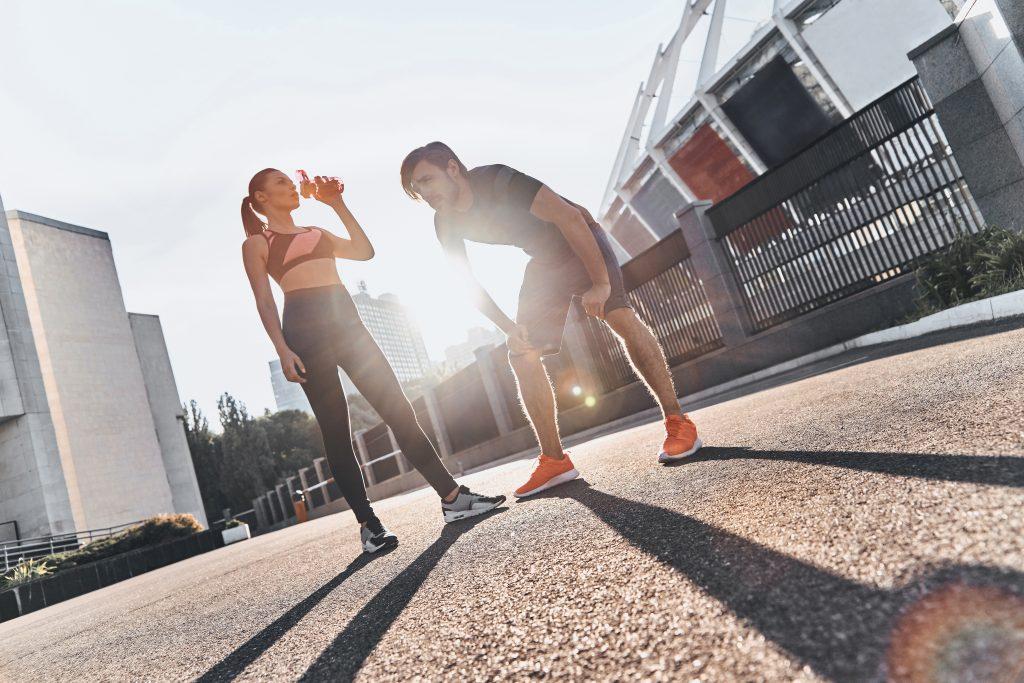
4. After a competition, you should not rehydrate indiscriminately
Hyponatremia is defined as a plasma sodium concentration of <135 mmol/L or a decrease in serum sodium of 7-10%. Finishing a competition and only drinking water can be harmful to a runner’s proper recovery. Not ingesting any source of carbohydrates and salts with that liquid can lead to hyponatremia.
Excessive hydration can be prevented by ensuring adequate oral intake of sodium, focusing on sweat rate and sodium content in sweat, exercise intensity, and environmental conditions. Studies suggest that a sports drink containing sodium in the range of 230 to 690 mg/L will provide optimal absorption and prevent hyponatremia.
🏃 Studies have documented that in ultra-marathons, the prevalence of hyponatremia can range from 30% to 55%.
References
- [1] Barnes, K. A., Anderson, M. L., Stofan, J. R., Dalrymple, K. J., Reimel, A. J., Roberts, T. J., Randell, R. K., Ungaro, C. T., & Baker, L. B. (2019). Normative data for sweating rate, sweat sodium concentration, and sweat sodium loss in athletes: An update and analysis by sport. Journal of sports sciences, 37(20), 2356–2366. https://doi.org/10.1080/02640414.2019.1633159