

Healthy plate
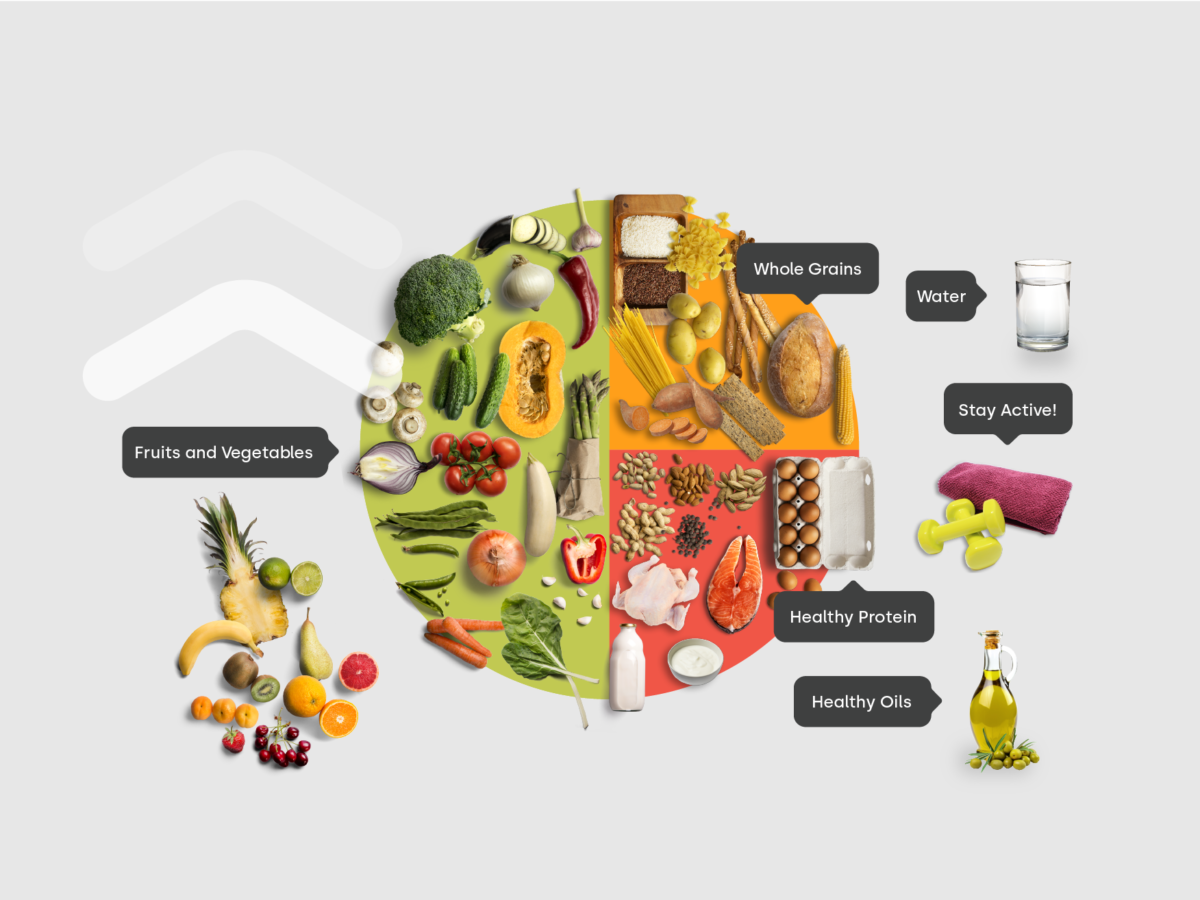
Hello Vibers! In today’s blog, we want to talk to you about a tool for better meal planning: the Healthy Plate.
Nowadays, there are many types of dietary guidelines, all aimed at providing nutritional information to the population. One of the most well-known guides, if not the most well-known, is the Nutritional Pyramid. However, the Healthy Plate aligns better with current recommendations and is easier to use. That’s why we’re going to show you how to interpret it and put it into practice.
What happened to the nutritional pyramid?
We are sure that you are familiar with the Nutritional Pyramid and that you have seen it in many places as a dietary guide to know which foods or food groups we should eat.
The first ideas for the pyramid were designed in 1992 by the United States Department of Agriculture (USDA), and later, various administrations in other countries adopted and adapted this initiative.
In 2004, the Spanish Society of Community Nutrition (SENC) released the first version of the ‘healthy eating pyramid,’ updating it in 2015 and later in 2018.

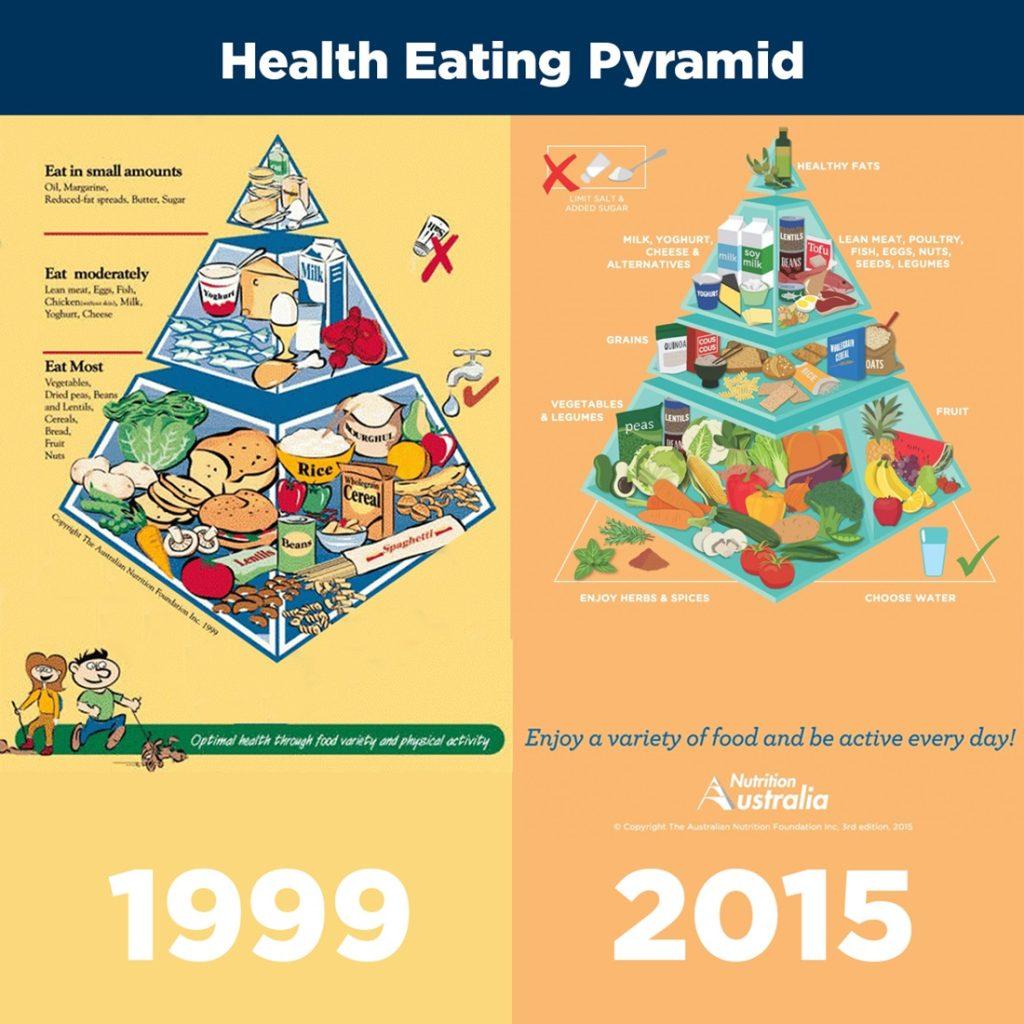
All the Nutritional Pyramids designed over those years share the idea that the foods or food groups that should dominate our diet are carbohydrates (cereals, pasta, refined flours, bread, etc.).
Additionally, they include refined flours, which are mainly composed of carbohydrates and are low in micronutrients (vitamins and minerals), protein, and fiber. On the other hand, nutritionally more interesting foods like fish, eggs, nuts, and dairy are not given enough emphasis. Lastly, they include alcoholic beverages, sugary drinks, and other nutritionally poor products such as pastries, processed meats, or snacks.
The Healthy Plate as an alternative to the Nutritional Pyramid
In 2015, the Australian Nutrition Foundation made significant progress by modifying and adapting the Nutritional Pyramid, notably improving the points mentioned in the previous section: it emphasizes plant-based foods and excludes those that should not be part of our diet, as you can see in the following image.
However, the Harvard School of Public Health takes it a step further by creating the Healthy Plate, giving the tool a more practical aspect, with the goal of making it easier for the population to apply these recommendations, thereby improving the information provided by the pyramid.
This new guide is no longer based on quantities, but on how to distribute meals using a plate, as the name suggests. It focuses primarily on nutritional education and global health.
The plate illustrates the proportions of food groups, rather than the “portion sizes.”
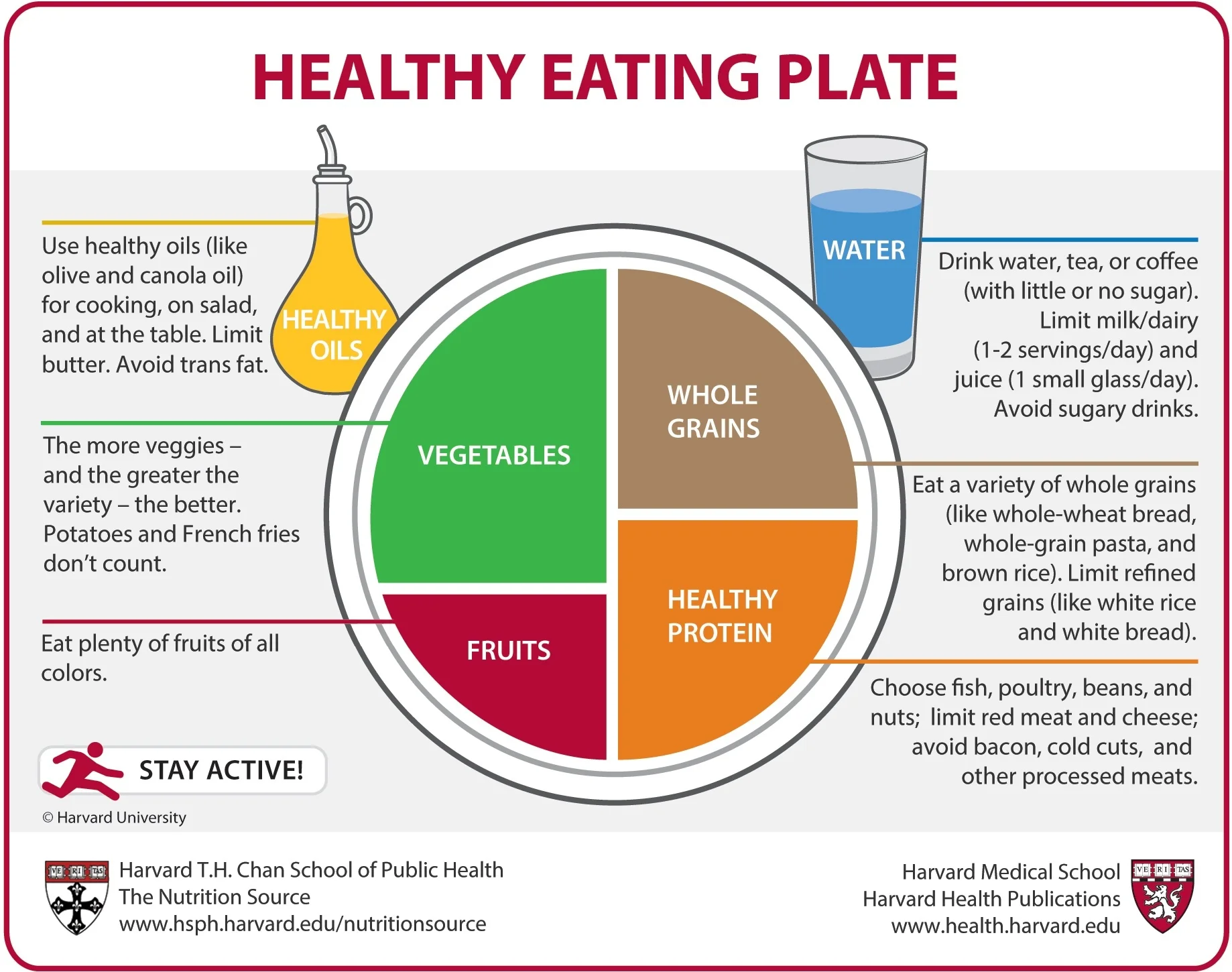
As you can see in the image, the Healthy Plate is divided into three parts:
- 50% Vegetables and Fruits: The more variety and color, the better. Potatoes are not included in this group.
- 25% Carbohydrates: Rice, pasta, potatoes, bread, oats, quinoa… These should primarily be whole grains.
- 25% Quality Protein: Fish, meat, eggs, legumes, nuts… It is recommended to limit the consumption of red meat, cold cuts, and processed meat.
Additionally, the guide indicates that water should be the beverage of choice, avoiding sugary drinks and reducing the intake of dairy and juice.
It also advises using healthy fats, such as olive oil or avocado, and avoiding trans fats. Physical activity is also mentioned, with a recommendation to stay active throughout the day.
It’s not necessary to fit all meals on a single plate; you can have a first and second course while respecting the mentioned proportions. The goal is to ensure that the meals throughout the day can be represented on a plate like this.
Following this new dietary guide, adaptations have emerged for different types of diets, such as vegetarian, vegan, gluten-free, and more.
How can we apply it?
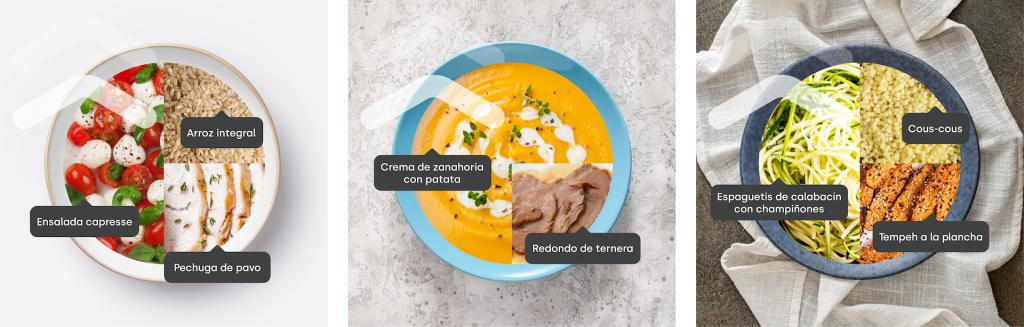
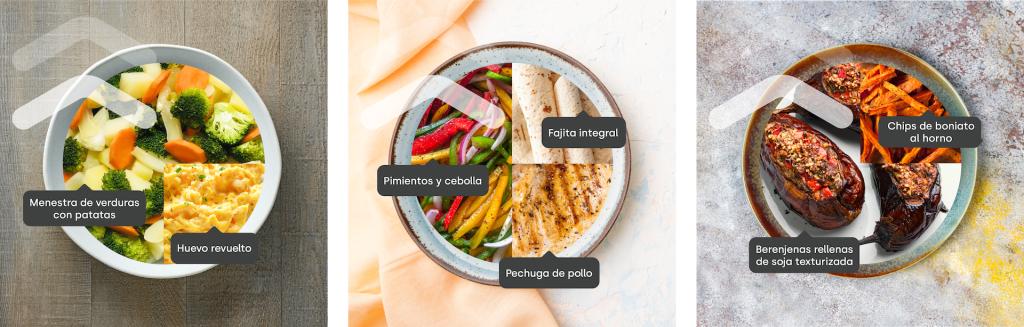
Here are some simple examples of how we could distribute our meals and dinners according to the proportions of the Healthy Plate.
Conclusions
Dietary guidelines are created with the aim of helping people eat healthily so we can obtain the nutrients needed to maintain good health.
The nutritional pyramid was the most commonly used guide until recently; however, it has certain limitations, the main one being that it places carbohydrates at the base rather than vegetables and fruits. As a result, a more visual and practical tool has been developed: the Healthy Plate, which not only offers advice but also guides us on how to implement it. The plate is divided into 50% vegetables and fruits, 25% carbohydrates, and 25% quality protein.
There are many ways to do this, and now that you’ve learned how to fill your plates healthily, it’s time to put it into practice!
References
- [1] Haack SA, Byker CJ. Recent population adherence to and knowledge of United States federal nutrition guides, 1992–2013: a systematic review. Nutr Rev [internet]. 2014;72(10):613-26
- [2] Aranceta-Bartrina J., Partearroyo T. et al. Updating the Food-Based Dietary Guidelines for the Spanish Population: The Spanish Society of Community Nutrition (SENC) Proposal. Nutrients [internet]. 2019;11(11):2675
- [3] Healthy Eating Pyramid. The Australia Nutrition Foundation [internet]
- [4] Healthy Eating Plate. Harvard School Of Public Health [internet]