

Metabolic flexibility

Hello Vibers! Today we’re diving into a topic that’s been gaining a lot of attention lately: metabolic flexibility. While it’s a hot topic, it’s often not clear what it really means or how to achieve it. So today, we’ll break down what metabolic flexibility is and how you can improve it through nutrition and training. If you want to learn more, keep reading!
What is metabolic flexibility?
Metabolic flexibility is the ability of an organism to respond to or adapt according to changes in metabolic or energy demands, as well as prevailing conditions or activities (1). In other words, it’s the body’s ability to use different substrates depending on the intensity of exercise. To be metabolically flexible, the body needs to be able to utilize both primary substrates, fats and glucose, depending on the situation and timing. Exercise intensity is a key factor in determining the primary energy substrate: when exercise intensity is low to moderate, the body should be able to use fats as the main source of energy while conserving glycogen as much as possible. Conversely, when exercise intensity is high, the body will need to use glucose as the primary substrate.
Metabolic flexibility is not a simple “on-off” phenomenon but involves subtle, strictly regulated adjustments. This means that the body simultaneously utilizes both fats and glucose. The body will use all available substrates, but depending on demand, intensity, and situation, one substrate will be prioritized over the others (2).

Today, metabolic flexibility is one of the key qualities sought by athletes. However, if we do not train properly and without nutritional periodization, the body will not be able to utilize the available substrates effectively and will not perform well (3).
Diet and training
As we mentioned earlier, the synergy between nutrition and training is crucial for improving metabolic flexibility.
We can distinguish between two main scenarios: on one hand, there are individuals who have limited time for training and engage in short-duration, high-intensity workouts; on the other hand, there are those who train for many hours a day but at low intensity.
In the first case, the person who trains at high intensities will primarily use glucose as their energy substrate. Therefore, their body may not be well-equipped to handle long distances, as it will not be adept at utilizing fats properly. Conversely, those who train for long periods at low intensities, while consuming fats and carbohydrates, only train their body to use fats during their workouts. As a result, they may struggle to utilize glucose effectively during short-duration, high-intensity efforts.
The same principle applies to nutrition. If our diet is consistently high in carbohydrates, the body will rely primarily on this substrate. Conversely, if we consume a low-carb diet, it’s akin to training at low intensity, and our body will predominantly use fats.
How can I improve metabolic flexibility?
To improve metabolic flexibility, proper training planning is essential. Generally, it is important to combine long-duration, low-intensity workouts with short-duration, high-intensity workouts (such as sprints and intervals). It is always advisable to consult a qualified professional to tailor the training to individual needs.

On the other hand, nutritional periodization should align with training adaptations. For low-intensity workouts, incorporating fats around the training sessions, and even within the meals themselves, can be beneficial. This includes foods like nuts, avocados, and olives. Conversely, for high-intensity workouts, including sugars is crucial to support the glycolytic system.
How is metabolic flexibility measured?
According to Iñigo San Millán, metabolic flexibility can be quantified using blood lactate measurement. His study shows how lactate affects the oxidation of fats and carbohydrates, concluding that lactate downregulates fat metabolism. Conversely, carbohydrate oxidation increases as lactate levels rise (4).
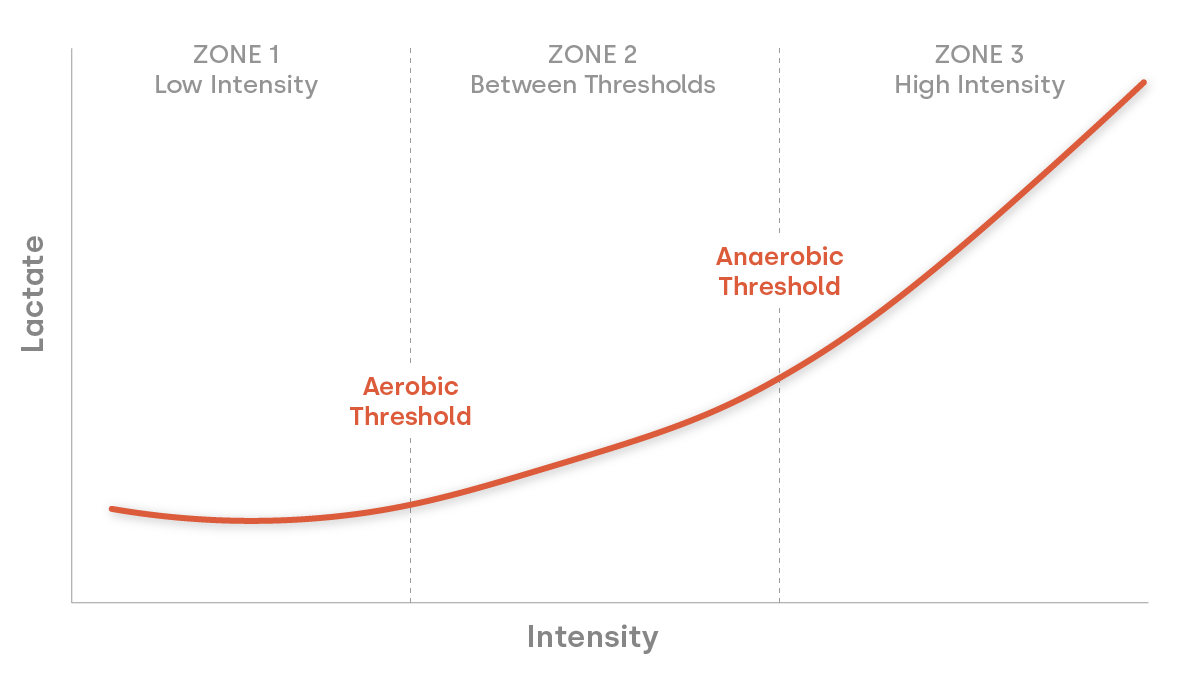
So, how can you determine if you are metabolically flexible? If you have low lactate levels and can delay reaching the lactate threshold while training at low intensities, you are likely more efficient. Conversely, if you cross that threshold without generating sufficient lactate, it indicates a lack of metabolic flexibility (4). In other words, the longer you can delay the increase in lactate at low intensities and the more lactate you produce at high intensities, the more metabolically flexible you are.
Conclusions
In conclusion, metabolic flexibility is the body’s ability to use different substrates based on exercise intensity. To be metabolically flexible, the body must efficiently utilize both primary substrates, fats and glucose, depending on the moment and situation. Improving this flexibility requires a synergy between nutrition and training. This flexibility can be measured through blood lactate levels. The longer we can delay the increase in lactate at low intensities and the more lactate we produce at high intensities, the more metabolically flexible we will be.
References
- [1] Goodpaster BH, Sparks LM. Metabolic Flexibility in Health and Disease. Cell Metab. 2017;25(5):1027-1036.
- [2] Smith RL, Soeters MR, Wüst RCI, Houtkooper RH. Metabolic Flexibility as an Adaptation to Energy Resources and Requirements in Health and Disease. Endocr Rev. 2018;39(4):489-517.
- [3] Palmer BF, Clegg DJ. Metabolic flexibility and its impact on health outcomes. Mayo Clin Proc. 2022;97(4):761–76.
- [4] San-Millán I, & Brooks GA. Assessment of Metabolic Flexibility by Means of Measuring Blood Lactate, Fat, and Carbohydrate Oxidation Responses to Exercise in Professional Endurance Athletes and Less-Fit Individuals. Sports Medicine. 2017; 48(2): 467–479.