

The movement is the variable that most influences our blood glucose levels

Nutrition and exercise are crucial aspects for maintaining stable blood glucose levels throughout the day. Even though we may not believe it, movement is the variable that most influences our glucose levels. Muscle contraction, not only during exercise but also while walking, climbing stairs, and other activities, triggers changes in our glucose metabolism, modulating blood sugar levels. Therefore, if you want to understand how our body responds to this stimulus, keep reading:
The movement
Exercise increases the energy demand of skeletal muscle, which can amplify muscle glucose uptake by up to 20 times compared to rest. In response to contractile signals during exercise, GLUT4 (the glucose transporter in skeletal muscle) translocates to the plasma membrane to facilitate glucose uptake through insulin-independent mechanisms. The increased blood flow to the active muscle during exercise also enhances glucose uptake by the muscle, and the intrinsic transport activity of GLUT4 can increase to support the substantial rise in glucose uptake during exercise.
The prevailing blood glucose concentration during exercise also depends on glucose production by the liver, which is stimulated by counterregulatory hormones (that maintain glucose levels) both at rest and during exercise. Therefore, the net effect of exercise on blood glucose levels is determined by the balance between hepatic glucose production and peripheral glucose uptake (1,2).
Even though it may not seem like it, movement is the variable that most influences our blood glucose levels.
Movement in the postprandial state
However, when exercise is performed in a postprandial state (after eating), both contraction-mediated and insulin-mediated glucose uptake are stimulated, leading to an additive effect on skeletal muscle glucose uptake induced by exercise. Postprandial exercise results in greater reductions in meal-induced glucose variations. For example, Colberg et al. demonstrated that a low-intensity 20-minute walk initiated immediately after a mixed macronutrient dinner reduced meal-induced blood glucose spikes in adults (2). In this regard, the authors concluded that various types of exercise are effective, such as walking, resistance exercises, cycling, or stair climbing.
This is why post-meal exercise is beneficial not only for normoglycemic individuals and overweight and obese adults (3,4) but also for people with type I or type II diabetes. A low-intensity 20-minute walk or a bodyweight strength training session reduced the 2-hour postprandial glucose average and the AUC (area under the curve) when performed immediately after a meal (5). To achieve maximum benefit, it seems important to start exercising very close to the meal (6).
The same snack, a different response
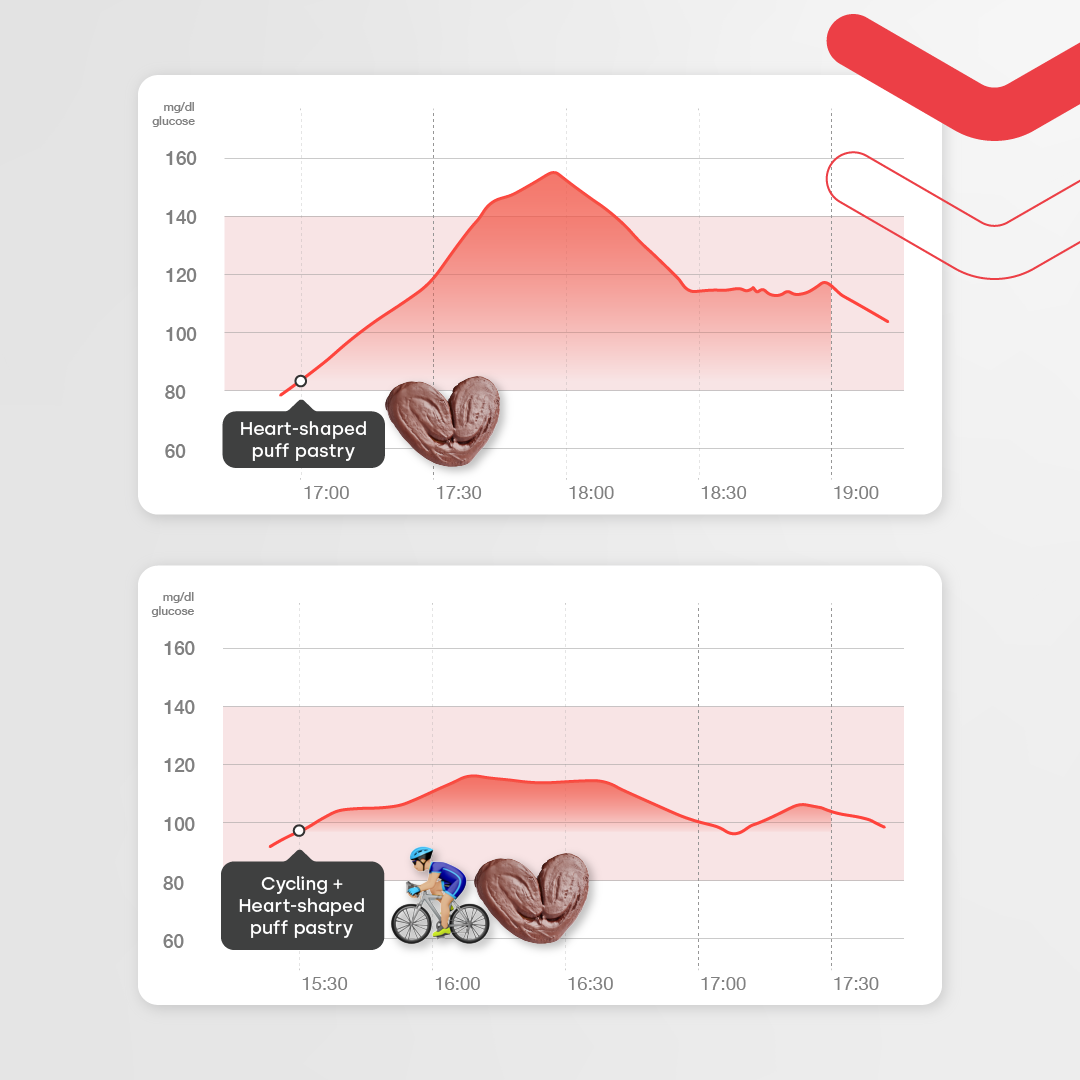
To better understand the theory, here’s a clear example from a Glucovibes user. In this case, the user had the same snack on two different days.
On the first day, the pastry was eaten as a snack without prior physical activity; on the second, after 2 hours of cycling. By observing the graphs from the two hours following the intake, it is noticeable that when the pastry is consumed after physical activity, the blood sugar spike is lower. This difference is due to the fact that exercise, in this case cycling, increases insulin sensitivity, improving blood glucose regulation and reducing the peak levels reached after eating. This can be explained by the “metabolic window” created by physical activity, where the muscles are more efficient at absorbing glucose from the bloodstream during or right after exercise, compared to a sedentary situation.
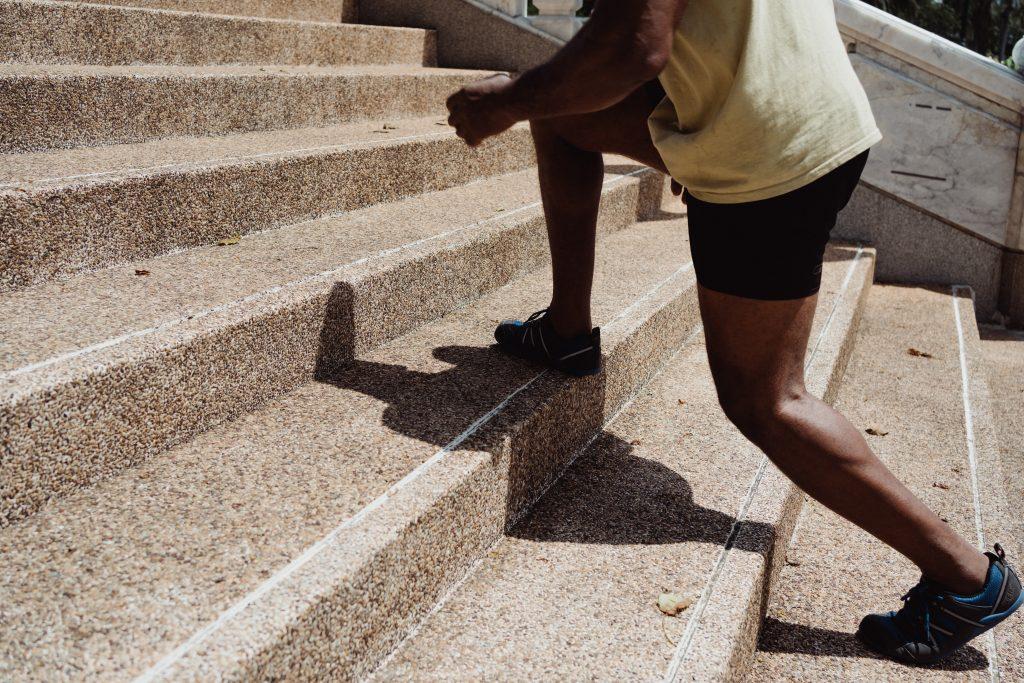
Therefore, we conclude that movement, not just physical exercise, is the variable that most influences our blood glucose levels. Thus, after eating, we recommend going for a low-intensity walk for 20 minutes to better regulate your glucose levels. This will help you maintain more stable blood glucose levels and reap the associated benefits.
Monitoring our blood glucose levels is the best way to improve our health. Join Glucovibes and start making a change.
References
- [1] Röhling M, Herder C, Stemper T, Müssig K. Influence of Acute and Chronic Exercise on Glucose Uptake. J Diabetes Res. 2016;2016:2868652.
- [2] Colberg S.R., Zarrabi L., Bennington L., Nakave A., Thomas Somma C., Swain D.P., and Sechrist S.R. Postprandial walking is better for lowering the glycemic effect of dinner than pre-dinner exercise in type 2 diabetic individuals. J. Am. Med. Dir. Assoc. 2019;10(6): 394–397.
- [3] Gillen JB, Estafanos S, Govette A. Exercise-nutrient interactions for improved postprandial glycemic control and insulin sensitivity. Appl Physiol Nutr Metab. 2021;46(8):856-865.
- [4] Aqeel M., Forster A., Richards E.A., Hennessy E., McGowan B., Bhadra A., et al. 2020. The effect of timing of exercise and eating on postprandial response in adults: a systematic review. Nutrients. 2020;12(1): 221.
- [5] Solomon T.P.J., Tarry E., Hudson C.O., Fitt A.I., and Laye M.J. Immediate post-breakfast physical activity improves interstitial postprandial glycemia: a comparison of different activity-meal timings. Pflugers Arch. Eur. J. Physiol. 2020;472(2): 271–280.
- [6] Jenna B. Gillen, Stephanie Estafanos, and Alexa Govette. Exercise-nutrient interactions for improved postprandial glycemic control and insulin sensitivity. Applied Physiology, Nutrition, and Metabolism. 2021;46(8): 856-865.