View all
Health | Lifestyle

why glucose level matters

why glucose level matters

Why Glucose?

I’ve been writing this newsletter for over 80 weeks, and I think it’s a good time to go back to basics and refresh some key concepts. Over the past two years, more evidence has emerged about the importance of understanding blood glucose dynamics—what they mean and how they impact your health. Today, we’re revisiting some fundamentals. And to make it simple and memorable, I’m going to share a musical analogy that you can explain to others. Here we go—hope you enjoy it and find it clear!

🧬 Glucose, your orchestra conductor.

Imagine your body as a symphony orchestra. Every organ, cell, and hormone is an instrument that must be perfectly tuned to create beautiful harmony. Glucose acts as the conductor of this orchestra, setting the tempo and ensuring everything works together seamlessly. Each function, organ, and hormone is like an essential instrument, playing its part at the right time in the symphony.


Insulin: The metronome

Insulin is the primary metronome, guiding glucose to maintain the proper rhythm. It helps the conductor keep a steady pace. When glucose spikes, the metronome works to slow things down, helping the conductor regain control. But if your metronome constantly adjusts to rapid rhythm changes (from glucose spikes), it eventually wears out, making it difficult to maintain a steady tempo. Imagine trying to follow the beat of a broken metronome—chaos ensues.


Cortisol: The percussionist

Cortisol, often called the stress hormone, drives intensity in the symphony. Think of when you play upbeat music to fuel your workout—that’s cortisol in action. During moments of stress or physical activity, cortisol raises glucose levels to give your body an energy boost. It’s like adding powerful drums and bass to the music for emphasis and energy. Occasional bursts of percussion add excitement, but if it dominates the symphony for too long, it disrupts balance. Chronic stress or poor sleep can elevate glucose, leading to inflammation, poor recovery, and exhaustion.


Leptin & Ghrelin: The hunger vocalists

These hormones are like the orchestra’s singers. Leptin signals when you’re full, and ghrelin announces when you’re hungry. If glucose levels are poorly managed, these “vocalists” lose their harmony: you may feel constantly hungry or never fully satisfied, leading to overeating or disrupted eating patterns. It’s like singing out of tune or at the wrong time, creating dissonance in the symphony. Large glucose spikes can send mixed signals, leaving the singers out of sync.


Estrogen & Testosterone: The wind instruments

These sex hormones act like wind instruments, adding flow and balance to the orchestra when activated properly. However, frequent glucose spikes and crashes can disrupt their levels, affecting fertility, mood, and fat distribution. This is particularly relevant during menopause, when glucose mismanagement may worsen symptoms like mood swings or menstrual discomfort.


Melatonin: The nighttime harp

At night, you want your symphony to wind down. Melatonin, the “harp of the night,” helps the orchestra lower its volume and prepare for rest. But elevated nighttime glucose keeps the conductor too energized, pulling the percussionist (cortisol) back into action and creating a restless melody that disrupts sleep.

At Glucovibes, we aim to decode your internal symphony by studying hoy glucose interacts with hormones and impacts your dayly weill-being.

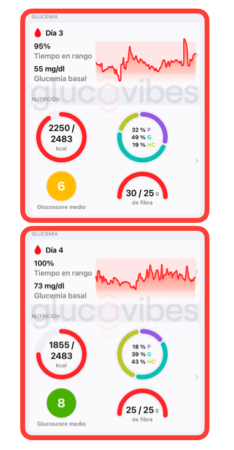
comparativa de glucosa en sangre de dos días

When glucose is out of control—either spiking too high or crashing too low—the entire orchestra falls into chaos. As shown in the first image above, the tempo speeds up, instruments lose sync, and your body’s symphony becomes unbalanced. You eat at odd times, feel hungry too often, sleep poorly, and with lack of energy. The melody becomes unenjoyable. Over time, this “out-of-tune” state can lead to:

  • Type 2 diabetes
  • Cardiovascular disease
  • Hormonal imbalances
  • Chronic fatigue
  • Weight management difficulties
  • Even increased risk of cancer.

On the other hand, when the conductor (glucose) maintains a steady tempo, as shown in the second image, your orchestra plays a harmonious melody that leads to:

  • Stable energy throughout the day
  • Good mood and mental clarity
  • Restful sleep
  • Disease prevention
  • Greater longevity and quality of life

What did you think of this analogy?

I hope it’s now clearer how glucose impacts your body and helps you understand the state of other organs and metabolic aspects.

Bring harmony to your life with Glucovibes! Use the code ONGIETORRI10 to get 10% off your VIBER PLUS plan. Click here to make it easy—within three months, you’ll create a symphony of well-being!

💾 Remenber

Every type of music has its time and place. Your orchestra conductor—blood glucose—needs to create the right environment for the music you’re playing.

🎁 Give life to your years

As always, I’d love your help in reaching more people. If you enjoyed this content, share it with others, or subscribe someone you think would benefit. You might just be giving the gift of longevity to your friends—because that’s what true longevity is about: adding life to years, not just years to life.

You can also find me on Twitter/X (@acondemellado) and Instagram (@acondemellado), where I share aspects of my lifestyle, activities, recipes, and things I enjoy.

Check out Glucovibes’ official Instagram (@glucovibes) for more experiments and insights. Share our profile with your friends, and know I’m always reading your questions and responding through articles, experiments, or real-world examples in these posts. 👋🏼

SUBSCRIBE AND ACTIVATE YOUR METABOLISM !

Become a VIBER!